Processes
Every mirror begins with glass cut precisely to the client’s specifications. This may include bevels, cut-outs, polished edges and other bespoke details. The initial cutting process is carried out by our specialist glass cutters before the mirror arrives at our workshop.
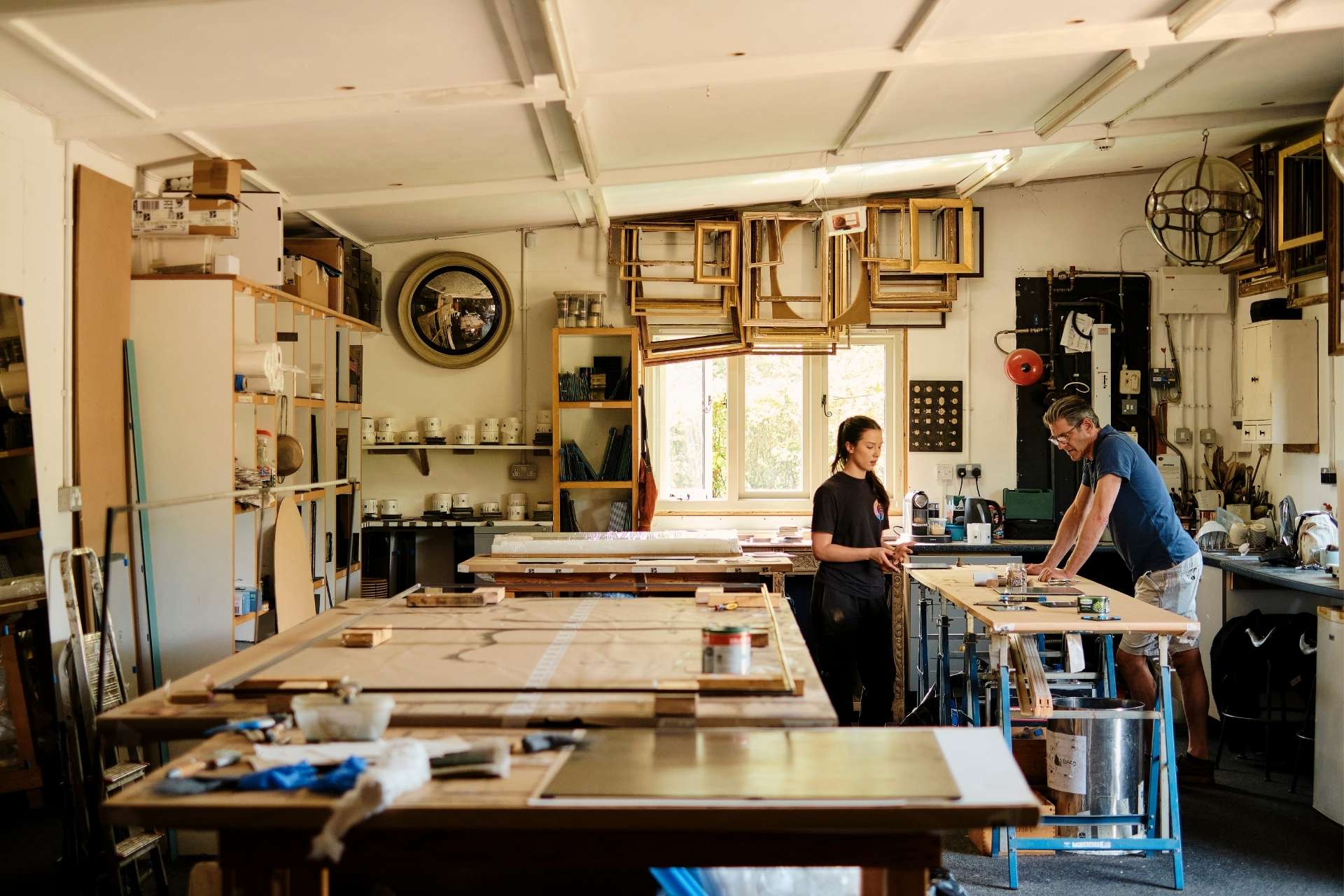
On arrival, each piece is carefully inspected for any anomalies, including scratches, shells, surface imperfections and discrepancies in size. We work to a tolerance of +/- 1mm, which is especially important for projects involving panelled mirror configurations where accuracy is critical.
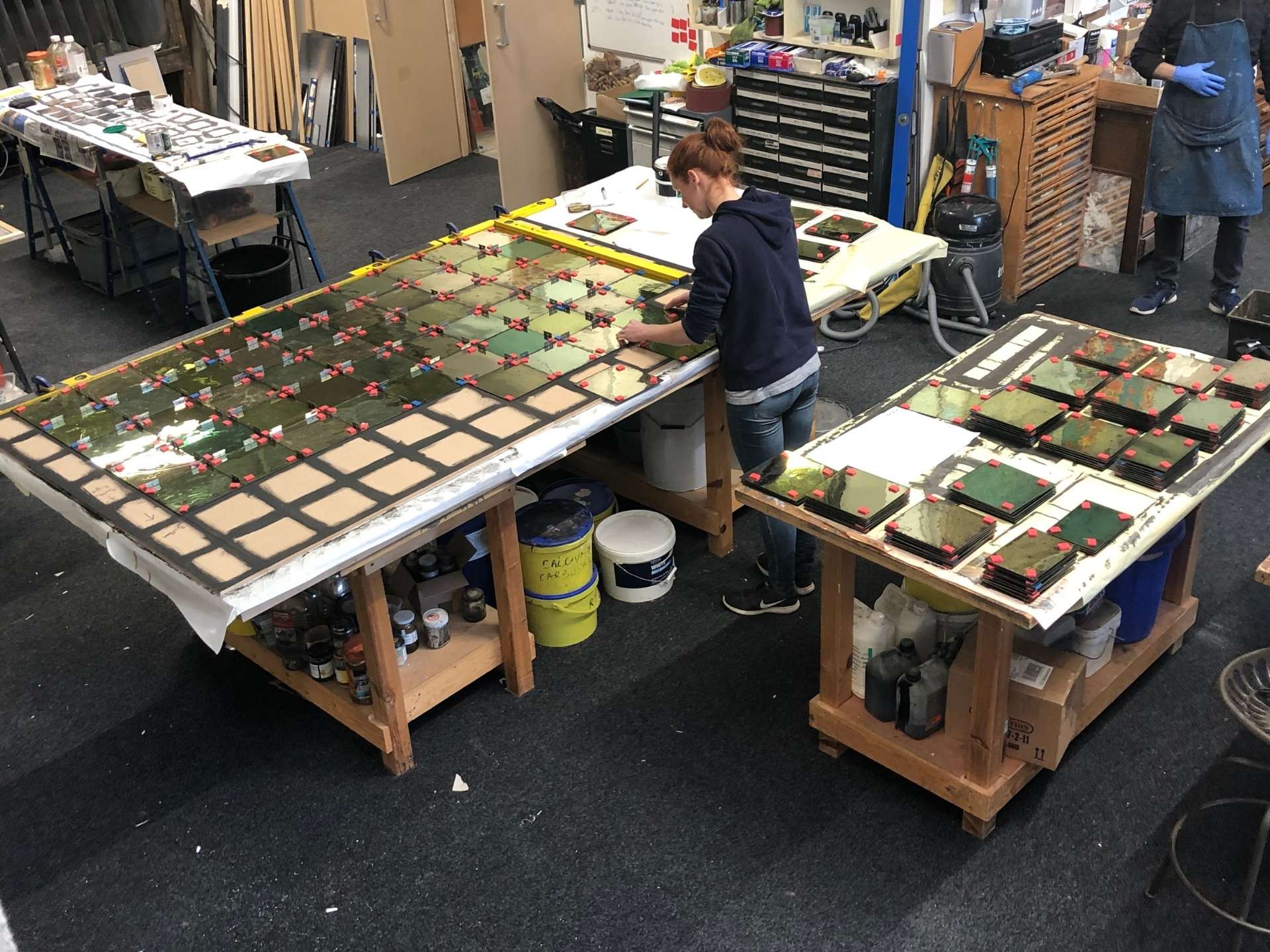
Once we are satisfied that everything is correct, the mirror is ready to be processed. If anything does not meet the required standard, it is returned to the cutters so that the issue can be corrected before work continues.
The glass is then prepared depending on the client’s brief: Antiquing, Verre Eglomisé, Gilding or Mirror & Imagery. Each finish requires its own specialist approach, and the processes differ considerably.
Antiqued Mirror
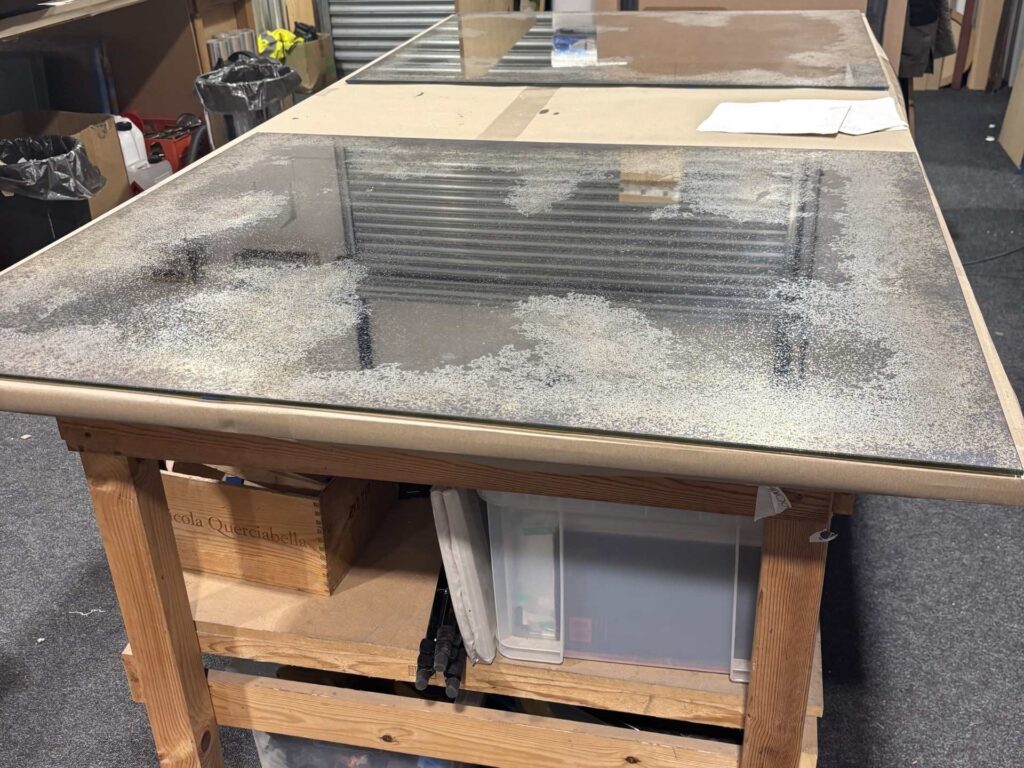
Antiquing involves applying pigments and specialist chemicals to the back of the mirror. The process must be monitored closely, as temperature and humidity can affect the speed and character of the finish. For this reason, we avoid starting antiquing late in the day, and we make sure we are available the following morning to seal the back of the mirror and prevent the process from developing further.
Verre Églomisé
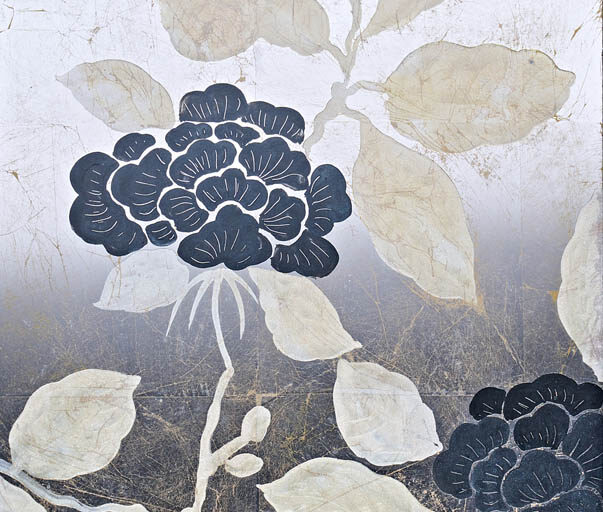
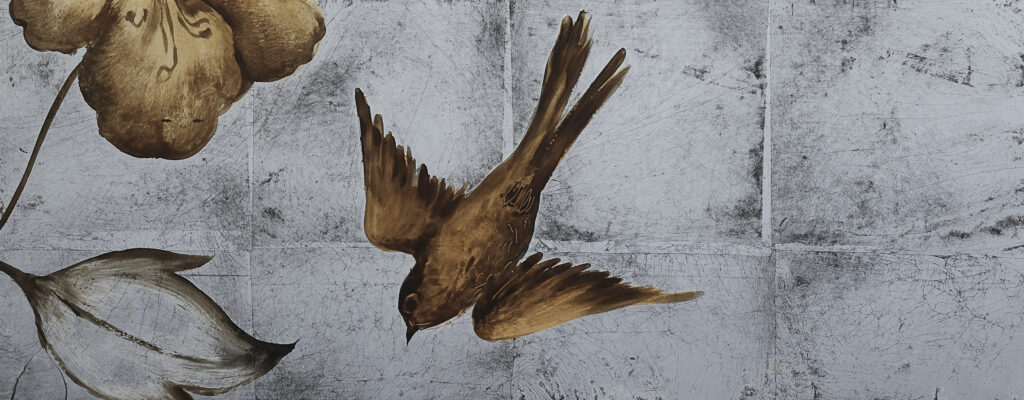
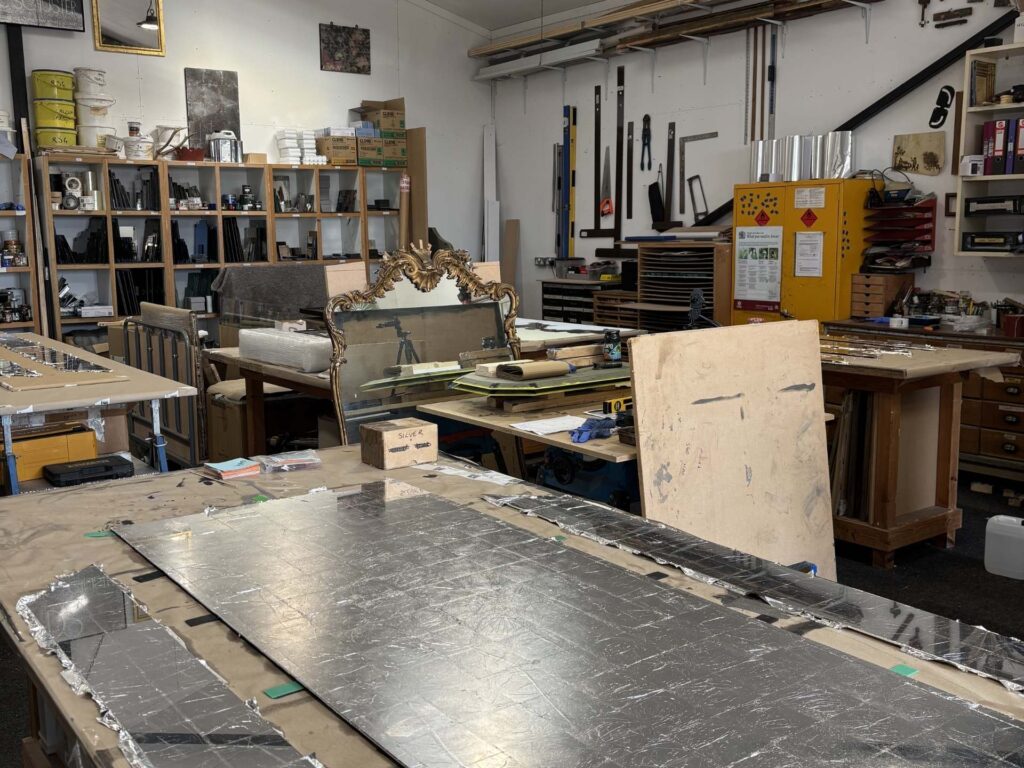
Verre églomisé is a more intricate and time-intensive process. We begin by ensuring the glass is completely clean and free from dust. Depending on the client’s chosen design, the glass may be placed over a grid so the pattern can be drawn accurately to scale. The selected leaf is then applied to the back of the glass and left to dry, which can take up to 12 hours depending on the temperature in the workshop. Once we are satisfied with the finish, we then seal the glass and it will then be carefully packaged and dispatched to the client.
Gilded Glass
For gilded glass, the preparation is similar to verre églomisé, although no grid is required where there is no decorative design. The focus is on achieving an even, refined finish that complements the overall scheme.
Mirror & Imagery
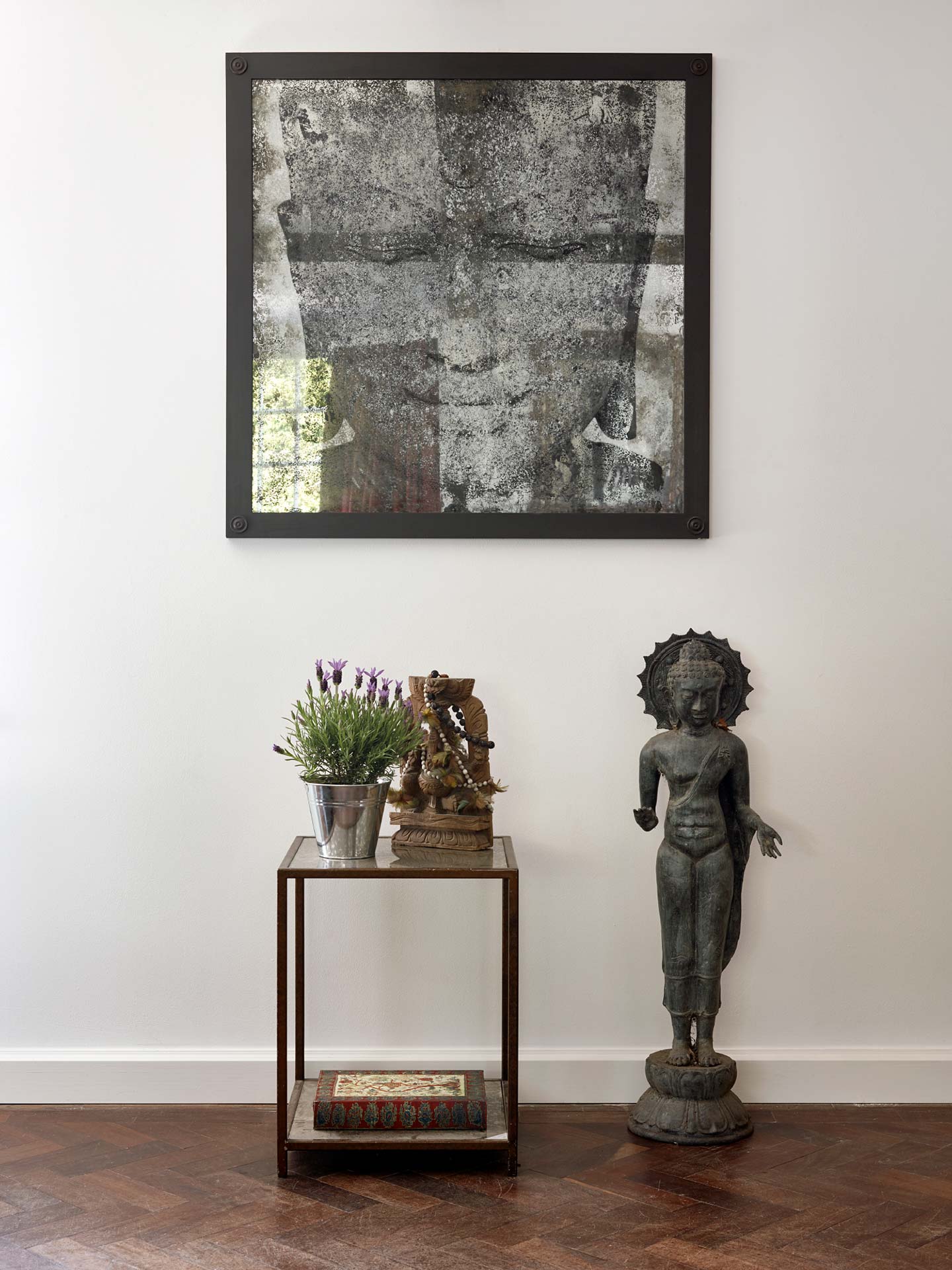
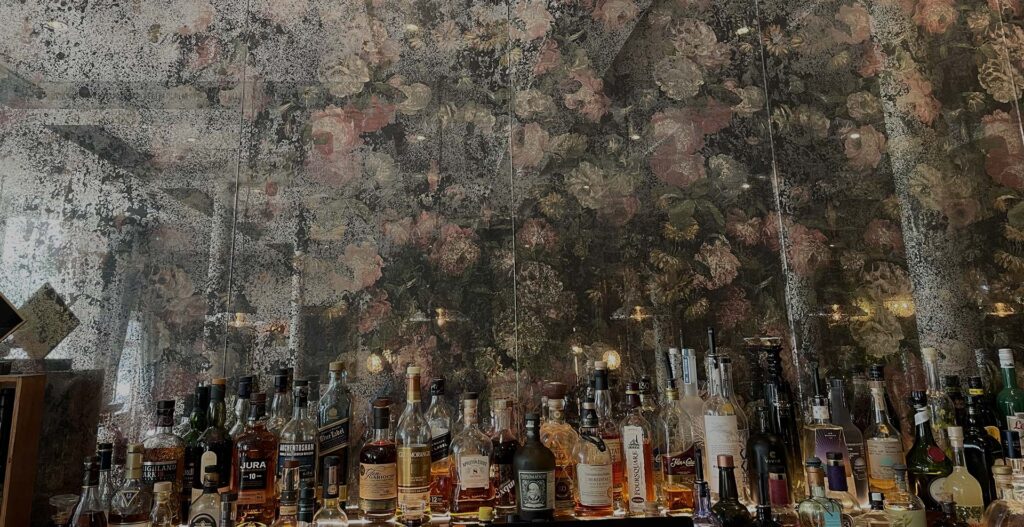
Here we cut the image to size – often we work with wallpaper and we are constrained by the width of the roll, so we often have to carefully splice to create a seamless finish. We then antique the mirror to gently dissolve reflection into print. This is a time-consuming process as it requires not only very careful positioning of the mirror but also constant attention to the level of antiquing.
Each of these processes can take up to two weeks to complete, and sometimes longer, depending on the complexity of the design, the scale of the project and the finish required.
Framed Mirrors
Many of our designers also specify framed mirrors, which we produce in our workshop. Everything we make is bespoke, from the exact dimensions of the mirror to the tone and finish of the frame.
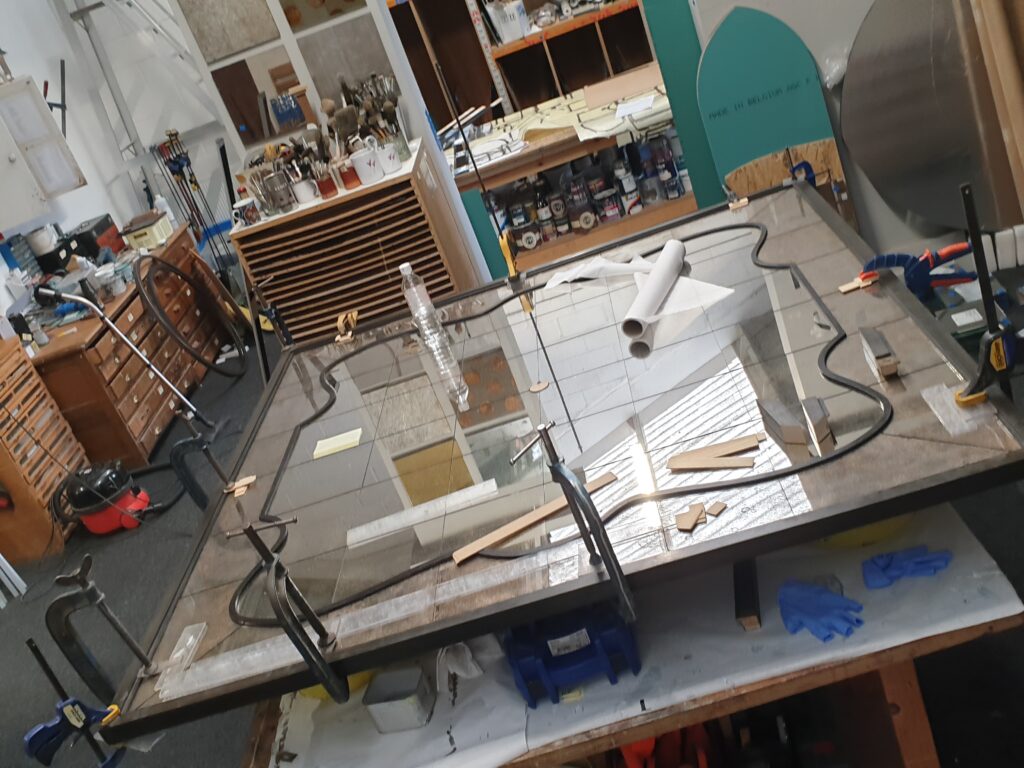
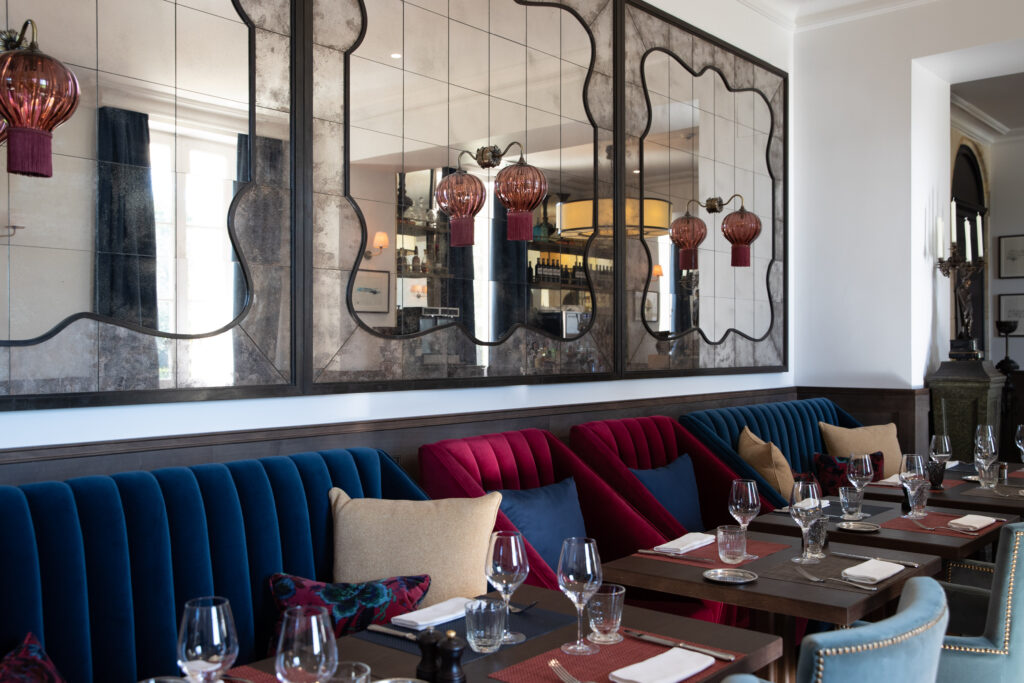
Throughout every stage, we work closely with designers and specifiers to ensure each finished piece reflects their vision and meets the highest standard of craftsmanship. Our workshop team carefully monitors the process from start to finish, identifying and resolving any issues as they arise.