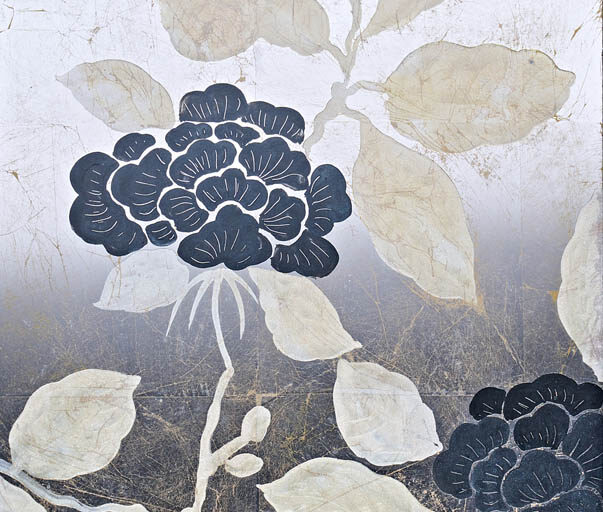
Verre églomisé is a traditional decorative technique that combines painting, gilding and glass to create intricate designs with a distinctive reflective finish. Unlike conventional decorative painting, the artwork is produced on the reverse side of the glass, allowing the finished design to be viewed through its surface. The result is a combination of colour, metallic reflection and fine detail that has been valued by artists and craftsmen for centuries.
Although verre églomisé is often associated with elaborate period mirrors and decorative interiors, the technique has a much longer history. Its continued use today reflects both an appreciation for traditional craftsmanship and the remarkable versatility of glass as a decorative material.
The origins of verre églomisé
The name verre églomisé is derived from Jean-Baptiste Glomy, an 18th-century French picture framer and art dealer associated with the technique. However, the practice of decorating the reverse of glass with precious metal leaf dates back considerably further, with surviving examples from medieval Europe and related traditions extending into antiquity.
Over the centuries, gilded and reverse-painted glass was used to decorate religious objects, pictures, furniture and mirrors. The technique allowed craftsmen to create finely detailed imagery with the rich appearance of precious metals, while the glass provided a smooth, reflective surface through which the decoration could be viewed.
During the 17th and 18th centuries, decorative glass became an increasingly important feature of European interiors. Elaborate mirrors, furniture panels and picture frames incorporated gilded detailing, often combining geometric patterns, floral motifs and classical ornamentation. These decorative traditions reflected the tastes of the period, but also demonstrated the considerable technical skill required to produce the work.
Today, examples of historical verre églomisé can still be found in antique mirrors and decorative objects. They provide an insight into the materials, artistic influences and working methods of earlier craftsmen, many of which continue to inform contemporary decorative glassmaking.
An In-Depth look at the technique
What makes verre églomisé particularly interesting is that the design is created from behind the glass rather than painted onto the surface facing the viewer. This changes the way the craftsman must approach the work. Elements that would normally be applied towards the end of a painting, such as highlights and fine details, may need to be completed first, with subsequent layers built up behind them.
Traditional methods often involve applying gold or silver leaf to the reverse of the glass and creating decorative patterns through engraving, painting or the careful removal of sections of the gilding. Other approaches combine painted designs with metal leaf applied behind the artwork. The methods and sequence of application vary according to the intended finish, but all require an understanding of how the individual layers will appear when viewed through the glass.
The use of metal leaf gives the finished piece its characteristic reflective quality. Gold produces warm, rich tones, while silver and other metals offer different colours and degrees of reflection. Pigments can be introduced to create more elaborate designs, with the relationship between painted and gilded areas adding depth and definition to the finished work.
Unlike conventional gilding applied to the visible surface of an object, the decorative layers in verre églomisé sit behind the glass. This creates a distinctive appearance, with the smooth glass surface separating the viewer from the intricate artwork beneath it.
Traditional craftsmanship in contemporary and modern interiors
While the materials and techniques have historical origins, verre églomisé remains relevant to contemporary interior design. Its ability to combine decorative imagery with a reflective surface makes it suitable for individual mirrors, architectural features and bespoke glass panels.
The decorative possibilities extend well beyond traditional period patterns. Botanical illustrations, geometric designs and more abstract compositions can all be incorporated into gilded glass, allowing the technique to complement both classical and contemporary interiors.
An important characteristic of traditionally produced verre églomisé is the individuality of each finished piece. Subtle variations in the application of metal leaf, the depth of colour and the character of the reflective surface are inherent to the handmade process. Rather than attempting to reproduce the uniform appearance of mass-produced materials, these variations are often an important part of the finished design.
The choice of materials also influences the overall appearance. Different metal leaves produce their own tones and reflective qualities, while the scale and complexity of the design must be considered in relation to the glass itself. Understanding how these elements work together is essential when developing a piece intended for a particular interior.
Verre églomisé at Dominic Schuster
At Dominic Schuster, our work with verre églomisé is informed by a longstanding background in antique restoration, conservation and traditional decorative techniques. Dominic’s experience in the restoration of decorative antiques dates back to the late 1980s, providing a foundation in historical materials and craftsmanship that continues to influence the work produced by our studio today.
From our workshop in Hampshire, we create bespoke verre églomisé and gilded glass, with every piece made by hand to the requirements of the individual commission. Our designs range from delicate botanical imagery to more structured geometric compositions, combining painted detail with carefully selected metal leaf finishes.
Working with traditional techniques allows us to explore a wide range of decorative effects. Our selection of materials includes gold, silver, copper and other specialist metal leaves, each offering different characteristics in terms of colour, texture and reflection. The application of these materials requires patience and careful preparation, particularly when producing detailed designs or working across multiple glass panels.
Our approach is also shaped by an understanding of the original decorative arts from which these techniques developed. Rather than simply reproducing historic designs, we use that knowledge to create work suited to contemporary interiors while retaining the character and individuality associated with traditional craftsmanship.
A considered approach to bespoke decorative glass
Every verre églomisé commission presents its own requirements, from the choice of design and metal leaf to the dimensions and intended setting of the finished glass. We work closely with interior designers, architects and private clients to develop finishes that complement the wider scheme, taking into account the surrounding materials, lighting and architectural details.
Our involvement can extend from initial design discussions and sampling through to site surveying, manufacture and installation. This allows the practical requirements of a project to be considered alongside the decorative finish, ensuring that both are addressed throughout the process.
Verre églomisé is a craft that has developed over centuries, yet its fundamental appeal remains much the same. The combination of hand-applied decoration, precious metal leaf and glass produces a surface that is difficult to replicate through industrial manufacturing. At Dominic Schuster, we continue to work with these traditional techniques, applying our experience in restoration and decorative finishes to create individual pieces for interiors today.
To find out more about our work, explore our verre églomisé and gilded glass finishes or contact our studio to discuss a bespoke commission.